ENTRANCES & COMPOSITION
Frame the first view of home.
The view from your front door sets the tone for the rooms beyond. A mirror, a sculptural branch and a little warm light can give an entryway a clear focal point, while leaving the everyday route through it easy and open.
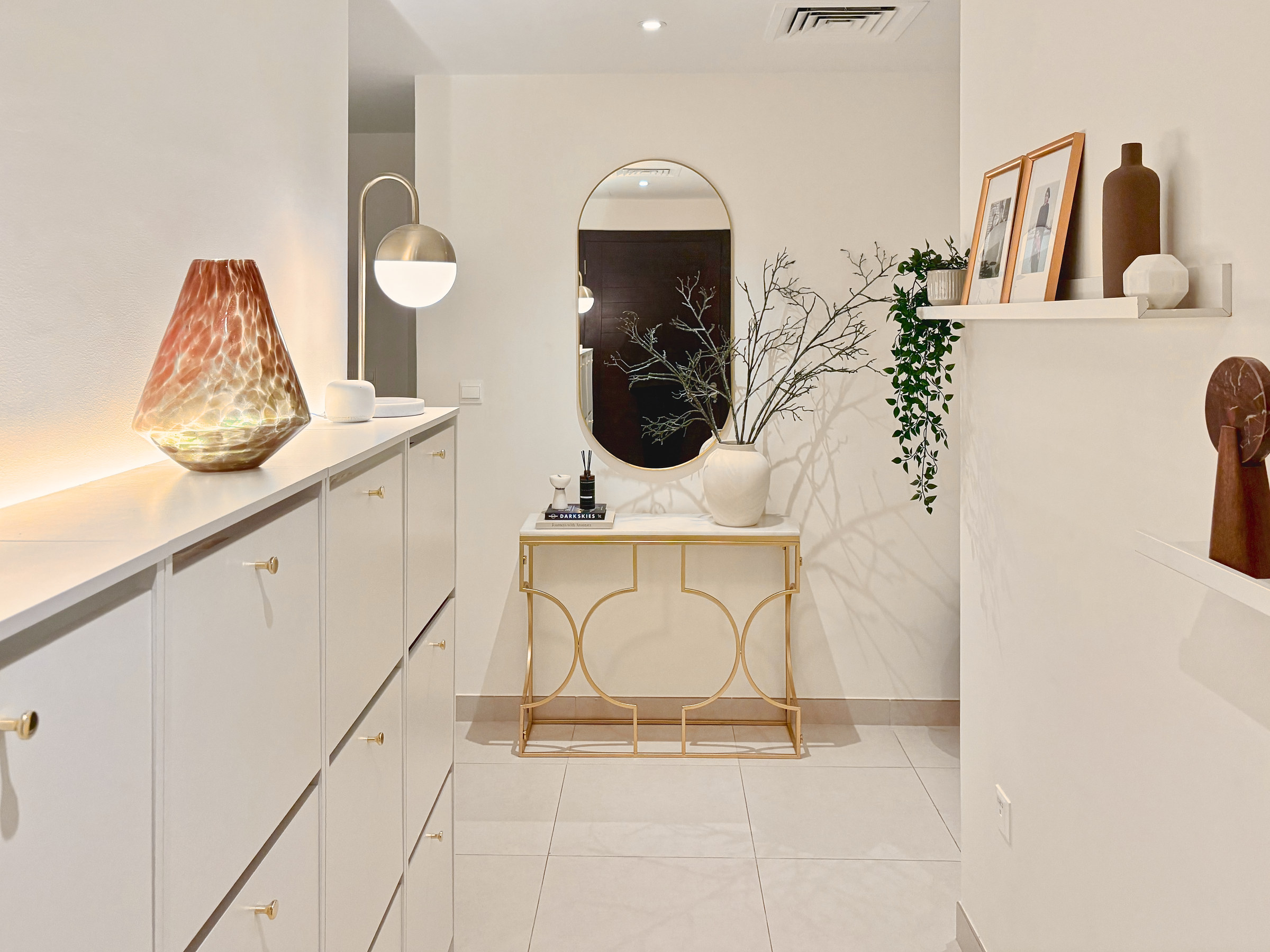
Begin with the view from the door.
Stand where you first enter and notice where your eye travels. The edges of a cabinet, the line of a wall and a glimpse of the next room all help shape that view. Choose one place for the eye to settle before deciding what else to add.
In this entrance, the oval mirror and slim console make a clear end point. The longer cabinet on the left and the shelves on the right sit around that composition. They give the passage depth, while the open floor keeps the route legible. Framing can come from the things already at the sides of a space.
Let the mirror earn its position.
A mirror brings another view into the arrangement. Before hanging one, check its reflection from the front door, from farther along the passage and at the height you will use it. A reflection of a lamp or an adjoining room can add depth; a reflection of everyday clutter may draw attention to something you would rather keep quiet.
Here, the long curved outline softens the straight edges of the console and cabinet. Its fine brass rim connects with the console frame and the lighting. The branches cross part of the mirror, linking the objects into one composition. There is still enough open glass for the mirror to feel useful.
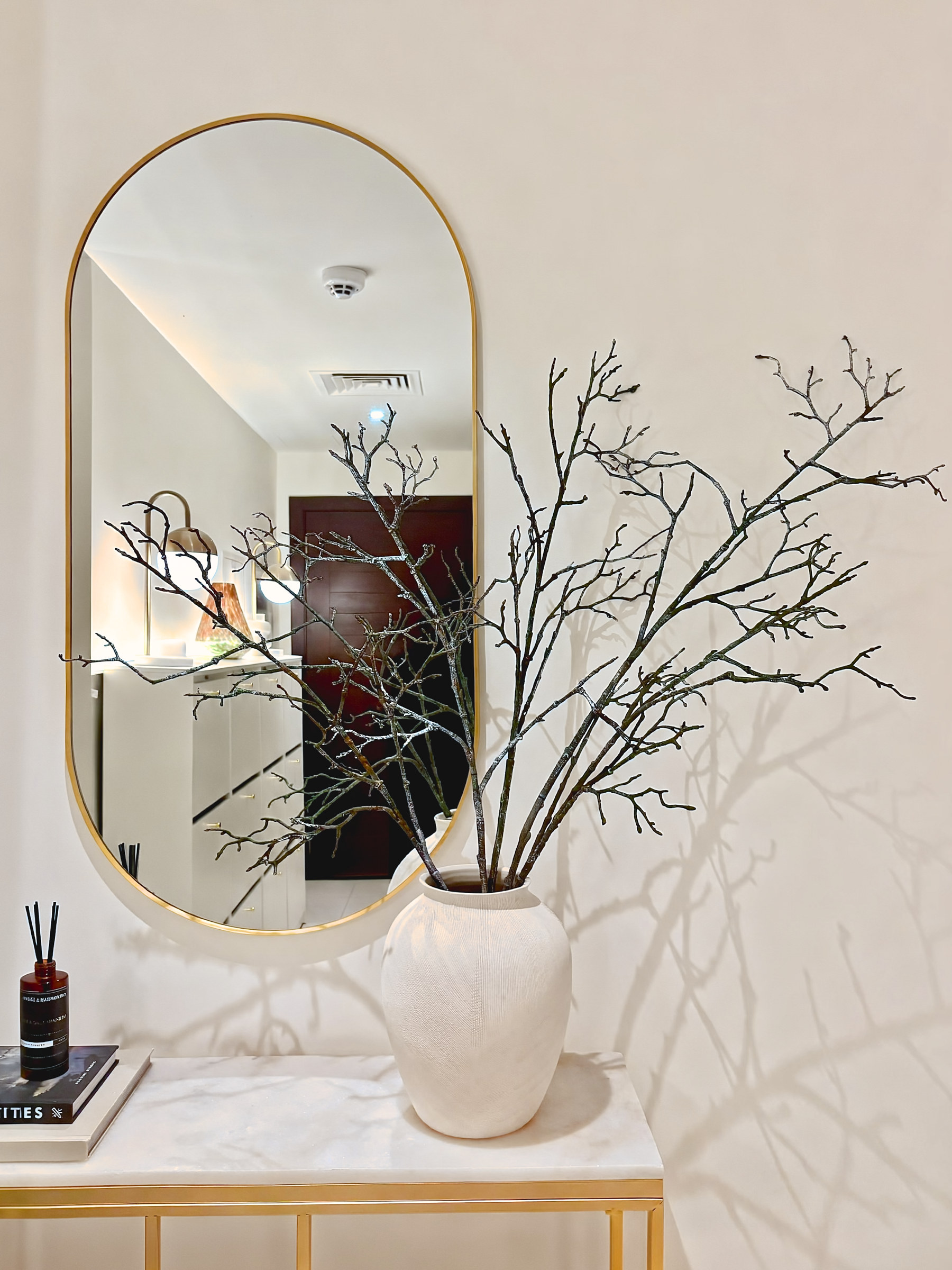
Use height without filling the surface.
A large vase with a few expressive stems can give a narrow console presence. Look at the overall silhouette from across the passage: the height, the spread and the gaps between the branches matter as much as the vase itself. The spaces between the stems let the wall and reflection remain part of the picture.
Keep projecting branches away from faces, door swings and the route through the hall. Choose a stable vessel and leave a useful area of surface for arrivals. One taller arrangement and a small lower group can provide enough variation; you do not need to fill the whole length of the console.
Frame the view in both directions.
Turn around and look towards the living room. An entrance is experienced on the way in and on the way out, and those two views can have different focal points. A composition that works beautifully from the door should still allow the next room to make sense.
From this direction, the branches sit close to the viewer and the large artwork holds the opposite wall. Between them, the open passage leads towards the seating and greenery beyond. The two sides have different shapes and weights, but each helps define the view. Keep the walking route clear as you test the balance.
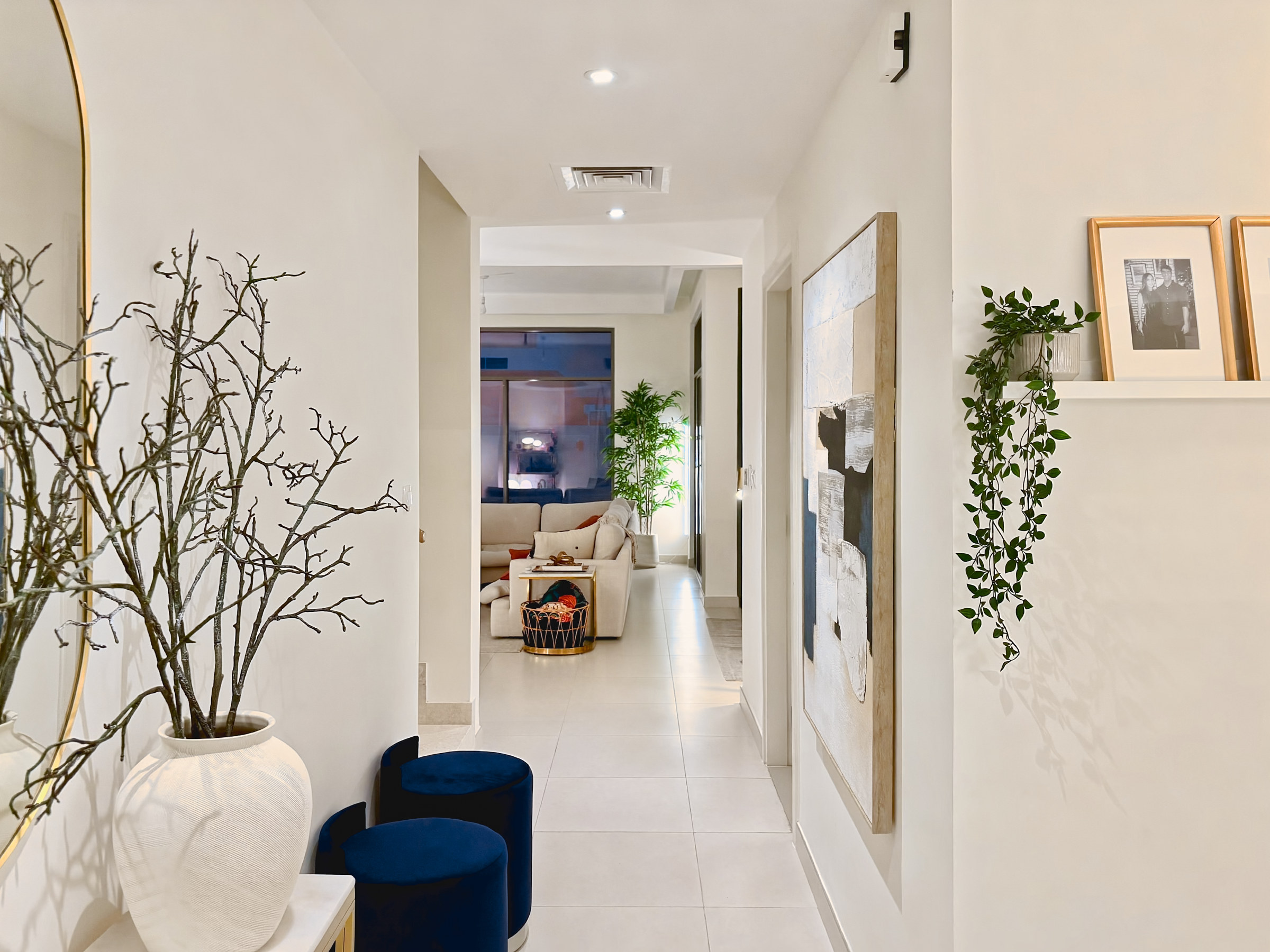
Give the entrance an evening setting.
Light changes which parts of an entrance you notice. The shaded glow along the cabinet and the globe lamp bring warmth at different heights. The branches cast a second, softer pattern on the wall. Together, those details give a simple arrangement more depth after daylight fades.
Check the scene with the lights you normally use, including any ceiling lights you need to move comfortably. Look for glare in the mirror and keep the floor easy to see. Repeat a few materials from the adjoining rooms, then leave the entrance room to be used. Its best first impression is one that still feels welcoming when you come home with your hands full.
SOMETHING TO TRY AT HOME
- Take one photograph from your front door and one looking back towards it.
- Choose a single focal point and check what its mirror, if any, reflects.
- Test the full spread of stems and the depth of furniture against the walking route.
- Look again in the evening, with clear floor space and a practical place for keys.
Talk about your space.
Bring it to a conversation. We can start with what isn’t working, or the feeling you want more of.
Start Your ProjectRelated insights
All Design Insights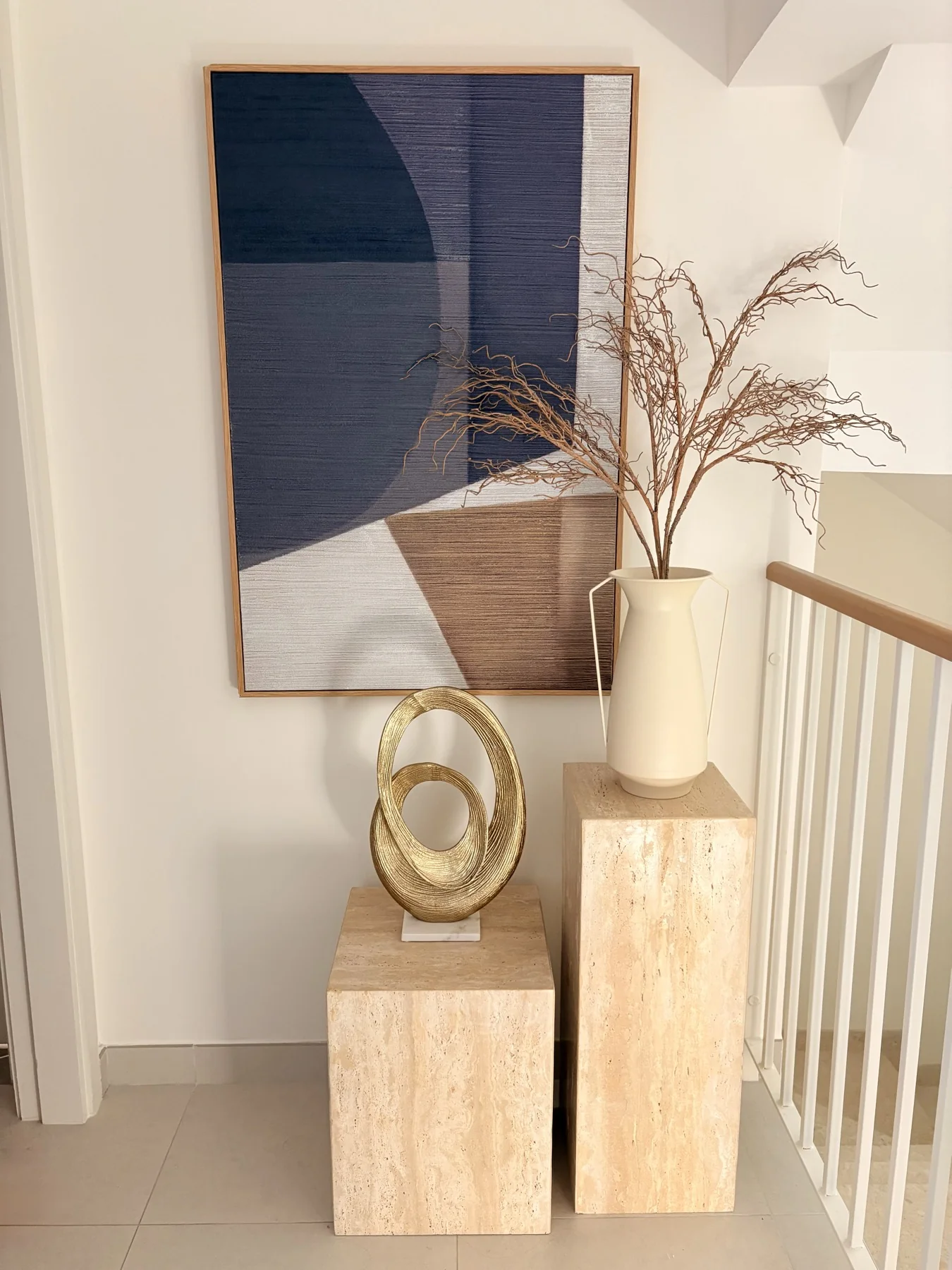
The Materials That Connect A Home.
A home feels connected when familiar details reappear as you move through it. A stone, a warm metal, a thread of colour: small repetitions can give very different spaces a sense of belonging.
Read The Insight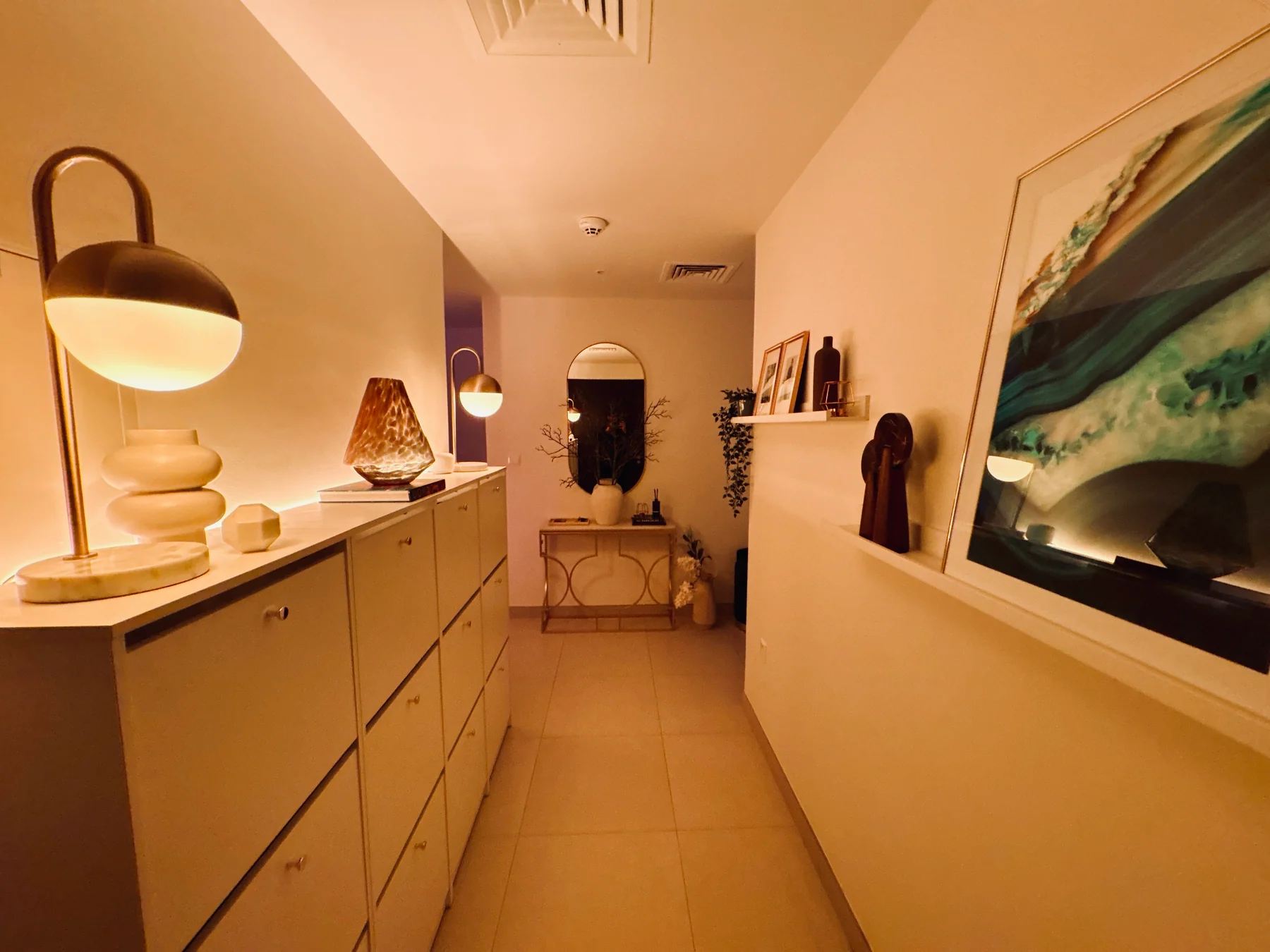
An entrance that welcomes you.
The entrance is more than a passage between the outside world and the rest of your home. It is where the day begins to change pace.
Read The Insight